What's new
See why a review score lands where it does
· For professionals, leaders and admins
Each job role now has behaviour tiers that say what baseline, expected, beyond and role-model work look like, and reviews show which tier every piece of evidence matched.
What each role expects
Every job role gets four behaviour tiers, drafted by AI from the organization's own key skills: baseline, expected, beyond and role model. Admins read and correct them in the job roles settings before reviews are scored with them, and can regenerate tiers that have gone out of date.
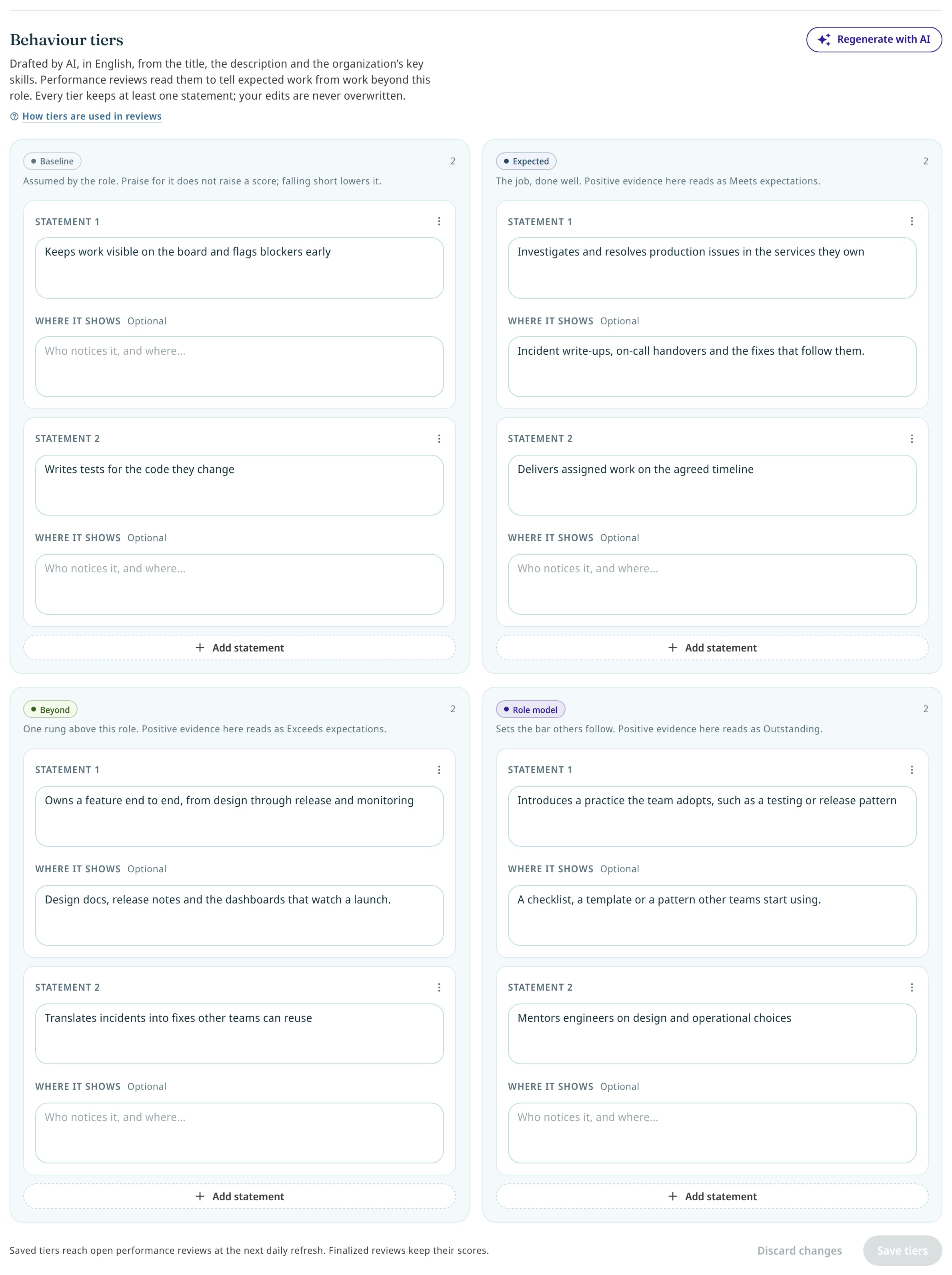
A profile's About page lists what the person's current role expects, so the bar is visible before the review, not after it.
Evidence, matched and explained
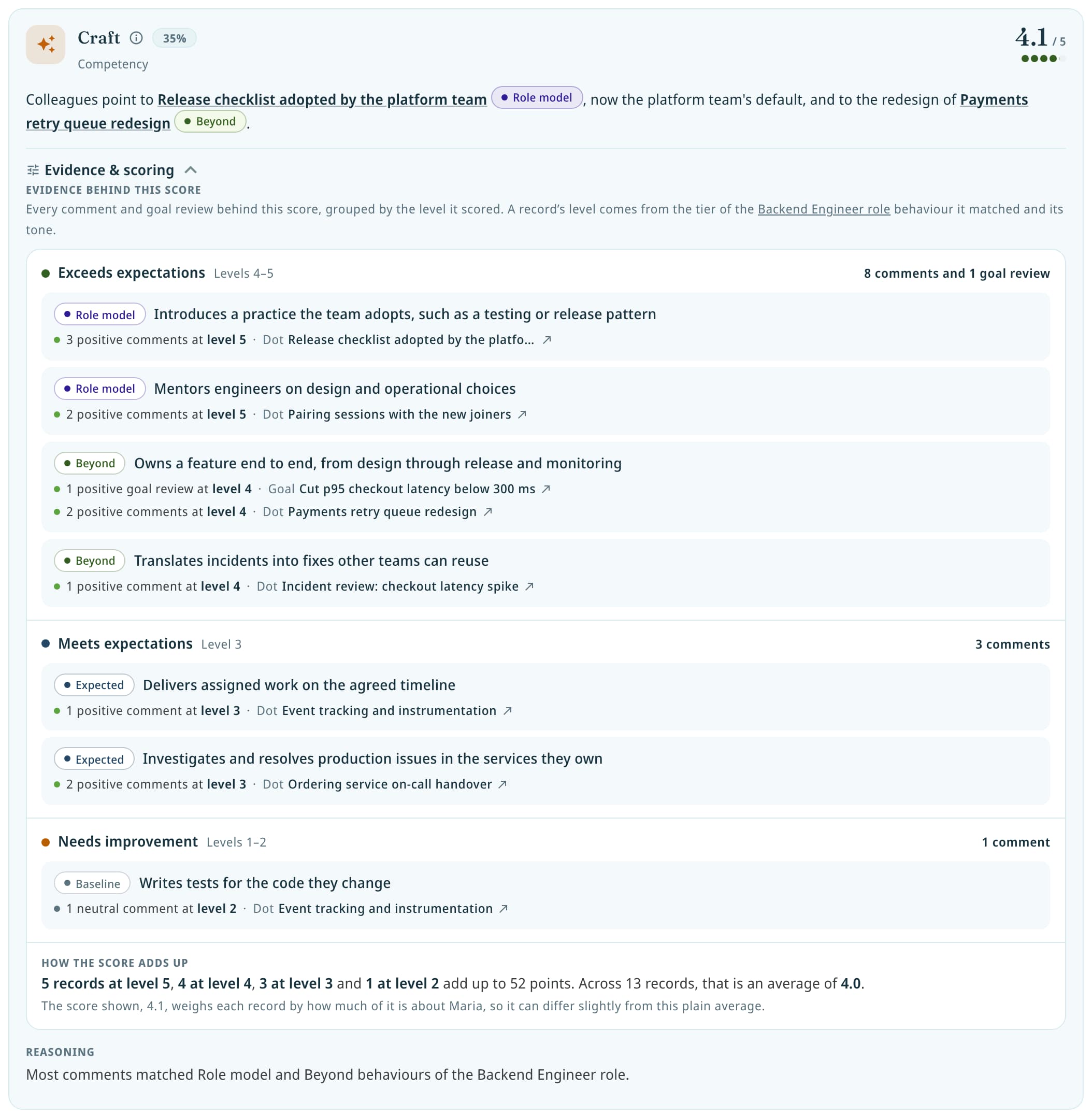
- Each feedback and goal review cited in a review shows the behaviour tier it matched.
- A competency's evidence is grouped by the level it scored: exceeds expectations, meets, or needs improvement.
- A side panel explains how the score is worked out, so praise for work the role already expects reads as meeting expectations, not as outstanding.
- Goal reviews cited as evidence show their tone, and whether they are actionable and constructive, like any other feedback.
