Integrations · Meetings and recordings
Work from Fathom, on the record
Connect Fathom once. Meeting transcripts and summaries arrive as dotsDot: Work worth talking about — time-bound, owned by whoever's doing it, open for conversation while it happens., and each person keeps what is theirs.
What comes in
From Fathom
Meeting transcripts and summaries, distilled into the work they were about.
Twelve months back
The first import backfills twelve months; new work keeps arriving after that.
What it feeds
Evidence for the evaluation dimensions and skills of your own framework.
Claimed by people
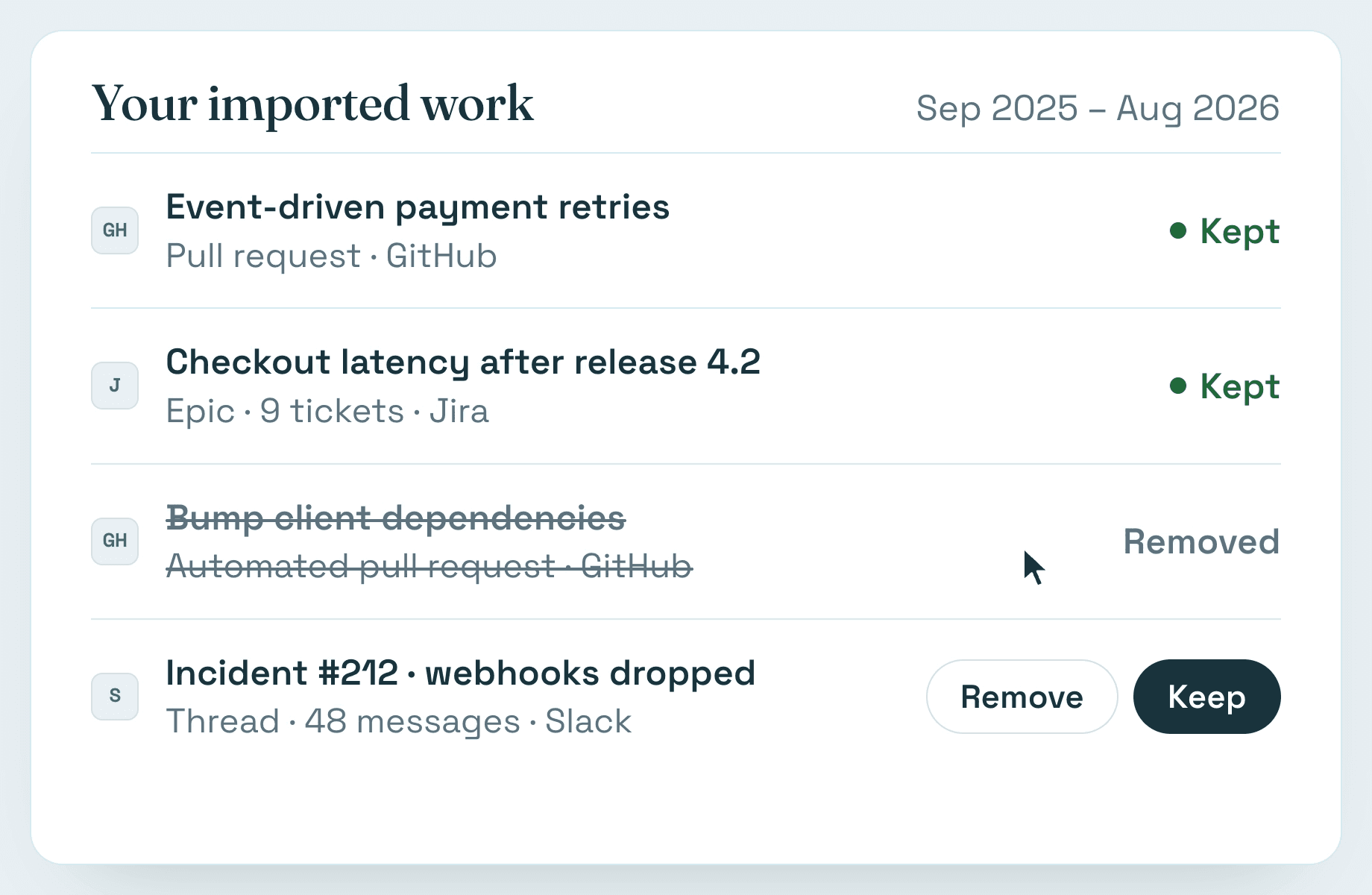
Each item stays anonymous until the person it belongs to keeps or removes it.
What stays out
- Sensitive personal content, removed before anything is shown.
- Confidential specifics, generalized before anything is shown.
- The raw source: it is deleted after processing; Nextdot keeps the extracted record.
How it works: Connect, claim, count
- 1
Connect
An admin connects the tool once and consents to the specific data requested.
Administration - 2
Claim
Imported work stays anonymous until the person it belongs to keeps or removes it.
Work-history import - 3
Count
Only kept items count, as evidence for feedback, Feedback Observations and the evaluation draft.
Performance evaluation
Security and privacy
- Infrastructure is in the EU.
- Nextdot is ISO 27001 certified.
- No model is trained on customer data.
- Imported work is anonymous until claimed, and identities of people not yet invited are hidden from admins.
FAQ: Questions, answered
More in the FAQ.
What does Nextdot import from Fathom?
Meeting transcripts and summaries, distilled into the work they were about.
Who connects Fathom, and what consent is asked?
An admin connects it once and consents to the specific data requested.
Can people remove items they don't want counted?
Yes. Each person keeps what is theirs and removes what is not. Only kept items count.
Is the original content stored?
No. Raw imported content is deleted after processing; Nextdot keeps the extracted record, not the source.
The best way to see it is on your own data
Happy to show it running on one team's tools — twelve months of work, your framework, your people.